
A team of University of Alaska Fairbanks engineers has joined a four-year, $6 million National Science Foundation project that will test whether microbes and artificial intelligence can recover rare earth elements from coal waste. Researchers from UAF’s Institute of Northern Engineering, including environmental engineering professor Srijan Aggarwal, are part of the collaboration.
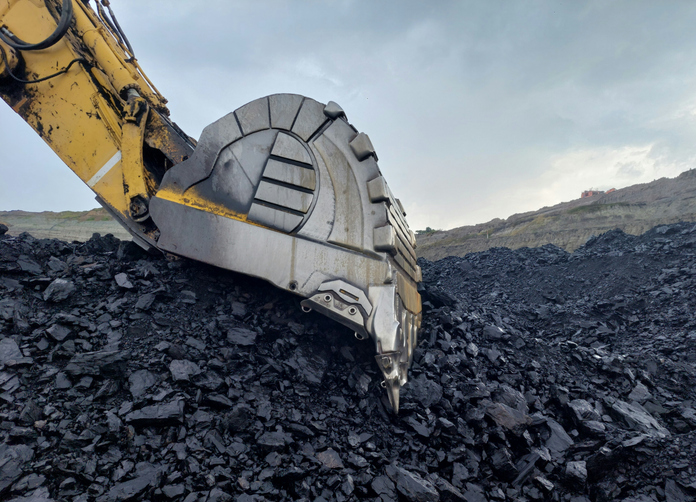
Coal mining and burning have left Alaska with leftover ash and dust, and the project treats those leftovers as a possible resource. Rather than relying on aggressive chemicals or heavy machinery, the approach uses microorganisms that attach to the valuable minerals in the waste. AI models would help scientists pick the waste likely to pay off best and set the conditions for recovering the minerals.
UAF is working with the University of Alaska Anchorage, Montana Technological University and the University of Wyoming, and Montana Tech’s share is $1.3 million. The partners are building what they call a “smart bio-refinery” that blends microbiology, mineral analysis, AI and engineering. They will check it with lab experiments and small pilot tests, including a virtual and a field pilot plant. The project is one of eight sharing $39.9 million in research funding across 16 jurisdictions.
Rare earth elements are essential to electronics, electric vehicles and military systems, and the U.S. relies heavily on foreign suppliers for them. The project also includes training for workers, and over the next four years researchers hope to turn their lab results into jobs in Alaska.